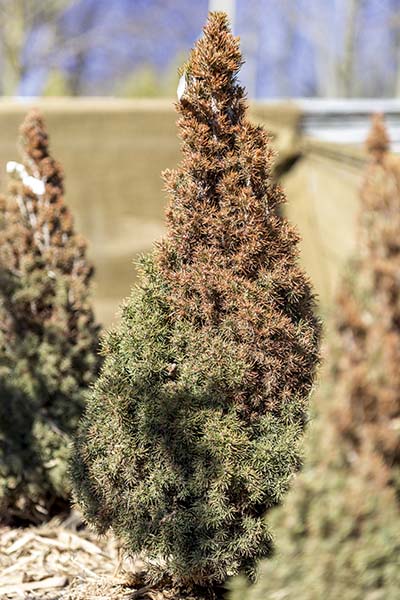
These young Dwarf Alberta Spruces were only partially protected from the winter wind by surrounding them with burlap. Unfortunately, this was not enough to prevent damage. To ensure better protection, each tree should have been individually wrapped with burlap.
To help them recover, we will begin by fertilizing with 14-14-14 solid granular fertilizer. After a few days of warmer temperatures that thaw the ground (indicated by greening grass), we will follow up with a liquid fertilizer like Miracle-Gro. The ground must be warm enough for the liquid fertilizer to be absorbed properly, so it’s important not to apply it too early—typically, two or three weeks after the thaw is ideal.
While the Alberta Spruces experienced wind burn, they have a good chance of recovery. Once the new buds emerge, we will assess whether the damaged branches are still alive. Burlapping the trees in late fall or early winter can provide good protection if done correctly. With the help of fertilization and partial winter protection, these Dwarf Alberta Spruces should recover well once new growth begins in the spring.
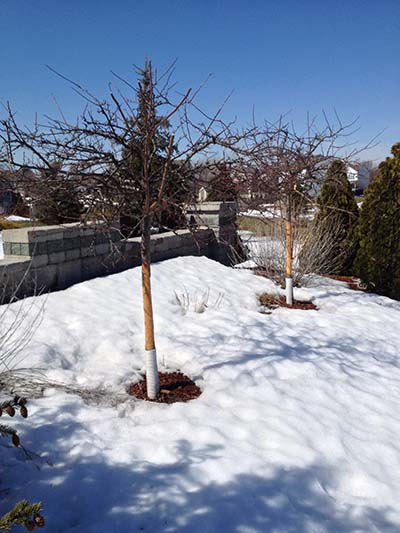
This winter, many young and tender plants, as well as established ones, were damaged by the cold, dry winds. The rabbits were also hungry and caused additional damage. The image on the right shows rabbit damage to two Dwarf Tina Sargent Crab trees. The rabbits chewed off the outer bark and managed to reach higher up the trunks due to drifting snow.
To prevent this type of damage, wrapping the trunks with chicken wire or spraying them with Hinder would have been effective solutions.